

Is Double Wear Maximum Cover Camouflage Makeup For Face And Body Water Based
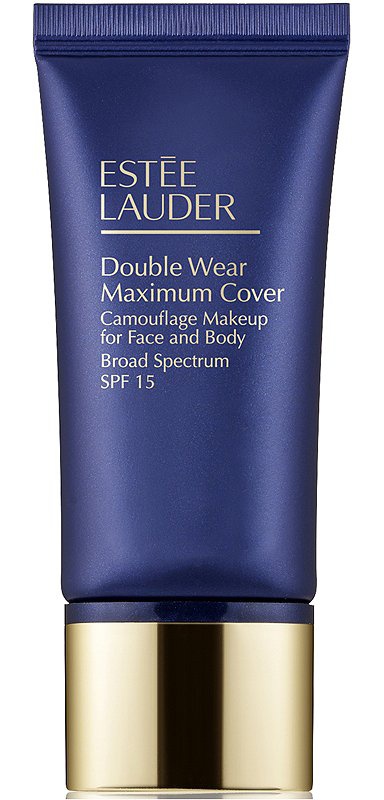
Double Wear Maximum Coverage
This long-wearing, flawless makeup, formulated with almost thirty% pigment, provides total concealing coverage wherever you need it. Utilize information technology to camouflage all skin imperfections and flaws on face or body, including scars, tattoos, spider veins, sun spots and other hyperpigmentation.
Uploaded past: myssyjym on
Ingredients overview
Isododecane, Isohexadecane, Methyl Methacrylate Crosspolymer, Petrolatum, Glyceryl Stearate, Disteardimonium Hectorite, Hydrogenated Styrene/Isoprene Copolymer, Titanium Dioxide, Microcrystalline Wax\Cera Microcristallina\Cire Microcristalline, Kaolin, Cholesterol, Aloe Barbadensis Leaf Extract, Fusanus Spicatus Wood Oil, Tocopheryl Acetate, Linoleic Acid, Glycine Soja (Soybean) Oil, Stearyl Glycyrrhetinate, Bisabolol, Silica, Propylene Carbonate, Methyldihydrojasmonate, Polyethylene, two,6-Dimethyl-7-Octen-2-Ol, Polyglyceryl-3 Diisostearate, Pentaerythrityl Tetra-Di-T-Butyl Hydroxyhydrocinnamate, Alumina, Phenethyl Alcohol
Highlights
Key Ingredients
Other Ingredients
Skim through
| Ingredient name | what-it-does | irr., com. | ID-Rating |
|---|---|---|---|
| Isododecane | emollient, solvent | ||
| Isohexadecane | emollient, solvent | ||
| Methyl Methacrylate Crosspolymer | |||
| Petrolatum | emollient | ||
| Glyceryl Stearate | emollient, emulsifying | 0, 1-ii | |
| Disteardimonium Hectorite | viscosity controlling | ||
| Hydrogenated Styrene/Isoprene Copolymer | viscosity controlling | ||
| Titanium Dioxide | sunscreen, colorant | goodie | |
| Microcrystalline Wax\Cera Microcristallina\Cire Microcristalline | viscosity controlling | ||
| Kaolin | colorant, abrasive/scrub | 0, 0 | goodie |
| Cholesterol | pare-identical ingredient, emollient | 0, 0 | goodie |
| Aloe Barbadensis Leaf Extract | soothing, emollient, moisturizer/humectant | goodie | |
| Fusanus Spicatus Wood Oil | |||
| Tocopheryl Acetate | antioxidant | 0, 0 | |
| Linoleic Acid | skin-identical ingredient, emollient, surfactant/cleansing | goodie | |
| Glycine Soja (Soybean) Oil | emollient, perfuming | 0, 3 | goodie |
| Stearyl Glycyrrhetinate | soothing | ||
| Bisabolol | soothing | goodie | |
| Silica | viscosity decision-making | ||
| Propylene Carbonate | solvent, viscosity controlling | ||
| Methyldihydrojasmonate | |||
| Polyethylene | viscosity controlling | ||
| 2,6-Dimethyl-7-Octen-2-Ol | perfuming | ||
| Polyglyceryl-3 Diisostearate | emulsifying | 0, 4 | |
| Pentaerythrityl Tetra-Di-T-Butyl Hydroxyhydrocinnamate | antioxidant, preservative | ||
| Alumina | viscosity controlling, abrasive/scrub | ||
| Phenethyl Alcohol | |||
| Titanium Dioxide (Ci 77891) | colorant | 0, 0 | |
| Iron Oxides (Ci 77491, Ci 77492, Ci 77499) | colorant | 0, 0 | |
| Chromium Oxide Greens (Ci 77288) | colorant | ||
| Chromium Hydroxide Green (Ci 77289) | colorant | ||
| Bismuth Oxychloride (Ci 77163) | colorant | ||
| Mica | colorant |
Estée Lauder Double Wear Maximum Coverage
Ingredients explainedA clear, colorless and odorless, highly volatile (significant it does not blot into the skin merely evaporates from it) liquid that'southward used as an emollient. It gives a nice non-oily calorie-free skin feeland information technology tin can better the slip of the formula without leaving a tacky residue behind.
It's also popular in make-upwards products as its volatility makes mascaras and foundations last longer. If that would not be enough, it's also an fantabulous solvent, and it's a regular non only on the ingredients lists of make-ups simply too on makeup removers.
A light, velvety, unique skin feel liquid that is a good solvent and besides makes the peel feel nice and polish (aka emollient). It's oft used in makeup products mixed with silicones to give shine and slip to the product. Information technology's too peachy for cleansing dirt and oil from the peel besides as for taking off make-upwardly.
Porous spherical microbeads (tiny little balls) that can give an elegant silky texture to the products. They are as well used to besprinkle light to reduce the await of fine lines on the skin, equally well as to absorb excess oil and requite a matt finish.
Likewise-called: Petroleum jelly, Vaseline | What-it-does: emollient
The famous Vaseline or Petroleum Jelly. Just like mineral oil, it is also a past-product of refining rough oil, aka petroleum, and information technology is also a mixture of hydrocarbons simply with bigger (C18-90+) carbon chain length.
The unique thing about petrolatum is that it is the most effective occlusive amanuensis known today. While the occlusivity of mineral oil is in the same league every bit the occlusivity of constitute oils, petrolatum is in a league of its ain. It sits on top of the skin and hinders so-chosen transepidermal water loss (TEWL) like goose egg else.
This comes in handy healing croaky lips or severely dry out skin patches, though overdoing it (i.east. reducing TEWL by more than 40%) is not adept as it tin create a dainty moist place for fungi and bacteria to abound.
As for petrolatum and safe, we can write here pretty much the exact aforementioned matter every bit nosotros take written at mineral oil. There is no evidence whatsoever that cosmetic, USP grade petrolatum is carcinogenic. It besides does not absorb into the skin only sits on top of it and that in itself greatly minimises health risks. Information technology also has a long history of safe utilize, as it was first used as a skincare product more 100 years ago, in 1872 to be precise.
Information technology is likewise non-comedogenic, though its pure form is very heavy and greasy so combination and oily skin types might want to avert it anyway.
Overall, information technology is the gold-standard occlusive amanuensis known today and a tub of Vaseline comes in handy in any household to heal cracked lips or other severely dry skin patches.
A super common, waxy, white, solid stuff that helps water and oil to mix together, gives body to creams and leaves the skin feeling soft and polish.
Chemically speaking, it is the attachment of a glycerin molecule to the fatty acrid chosen stearic acid. Information technology tin can exist produced from almost vegetable oils (in oils three fatty acid molecules are attached to glycerin instead of just ane like here) in a pretty simple, "greenish" procedure that is similar to soap making. It's readily biodegradable.
It also occurs naturally in our torso and is used as a food condiment. As corrective chemist Colins writes information technology, "its prophylactic actually is across any doubt".
An organic derivative of hectorite dirt, Disteardimonium Hectorite is used as a viscosity controller - it thickens up formulations to brand them less runny.
It's about popular use in cosmetics is in sunscreens, under the trademarked name Bentone 38 from Elementis. According to the manufacturer info, it is a real multi-tasker, including the ability to foreclose pigments settling during storage, stabilizing a formula for longer,creating a light and smooth skin feel and enhancing the h2o-resistance of sunscreen formulas.
 We don't have clarification for this ingredient yet.
Titanium Dioxide is 1 of the two members of the elite sunscreen group chosen concrete sunscreens (or inorganic sunscreens if y'all're a science geek and want to be precise).
Traditionally, UV-filters are categorized as either chemical or physical. The large difference is supposed to be that chemic agents absorb UV-light while physical agents reflect it like a agglomeration of mini umbrellas on summit of the peel. While this categorization is easy and logical it turns out it's non true. A recent, 2016 study shows that inorganic sunscreens piece of work more often than not by assimilation, just like chemical filters, and but a fiddling bit by reflection (they do reflect the calorie-free in the visible spectrum, only mostly absorb in the UV spectrum).
Anyhow, it doesn't matter if it reflects or absorbs, Titanium Dioxide is a pretty crawly sunscreen agent for ii main reasons: information technology gives a overnice broad spectrum coverage and it's highly stable. Its protection is very adept between 290 - 350 nm (UVB and UVA II range), and less good at 350-400 nm (UVA I) range. Regular sized Titanium Dioxide besides has a cracking safety contour, it's non-irritating and is pretty much free from any health concerns (like estrogenic effect worries with some chemical filters).
The disadvantage of Titanium Dioxide is that it's not cosmetically elegant, meaning it's a white, "unspreadable" mess. Sunscreens containingTitanium Dioxide are often difficult to spread on the skin and they leave a disturbing whitish tint. The corrective industry is, of course, actually trying to solve this problem and the best solution so far is using nanoparticles. The itsy-bitsy Nano-sized particles amend both spreadability and reduce the whitish tint a lot, but unfortunately, it also introduces new health concerns.
The main concern with nanoparticles is that they are so tiny that they are captivated into the skin more than nosotros want them (ideally sunscreen should remain on the surface of the skin). In one case absorbed they might form unwanted complexes with proteins and they might promote the formation of evil free radicals. But do not panic, these are concerns nether investigation. A 2009 review article about the safety of nanoparticles summarizes this, "to date, in-vivo and in-vitro studies take not demonstrated percutaneous penetration of nanosized particles in titanium dioxide and zinc oxide sunscreens". The English translation is, then far it looks like sunscreens with nanoparticles do stay on the surface of the skin where they should be.
All in all, Titanium Dioxide is a famous sunscreen amanuensis and for good reason, it gives wide spectrum UV protection (all-time at UVB and UVA II), it's highly stable, and it has a expert rubber profile. It's definitely one of the best UV-filter agents we accept today, specially in the Us where new-generation Tinosorb filters are non (yet) approved.
We don't have description for this ingredient withal.
Kaolin is a type of clay or to be precise, a naturally occurring hydrous aluminum silicate. When yous hear dirt, you probably think of a muddy greenish-black mess, but that one is bentonite, and this one is a fine, white powder. It is so white that it'southward also often used, in small amounts, as a helper ingredient to give opacity and whiteness to the cosmetic formulas.
Equally a clay, it's absorptive and tin suck up excess sebum and gunk from your skin, but less so than the more aggressive bentonite. As it's less absorbent, it's as well less drying and gentler on the skin, and so it's platonic for dry out and sensitive pare types.
It'due south one of the important lipids that can be institute naturally in the outer layer of the skin. About 25% of the goopy stuff between our skin cells consists of cholesterol. Together with ceramides and fatty acids, they play a vital role in having a healthy skin barrier and keeping the skin hydrated.
Apart from being an important peel-identical ingredient, it'due south besides an emollient and stabilizer.
We don't have description for this ingredient nevertheless.
Too-called: Vitamin E Acetate | What-information technology-does: antioxidant | Irritancy: 0 | Comedogenicity: 0
It'southward the nearly normally used version of pure vitamin E in cosmetics. You lot can read all about the pure class here. This one is the and so-called esterified version.
According to famous dermatologist, Leslie Baumann while tocopheryl acetate is more than stable and has a longer shelf life, it's also more than poorly absorbed by the skin and may non take the aforementioned awesome photoprotective effects as pure Vit E.
The famousomega-6 fatty acid,the mother of all ω-6 fatty acids in our body. Information technology is a so-called polyunsaturated fat acid meaning it has more than i (in this case ii) double bonds and a somewhat kinky structure that makes LA and LA-rich oils a sparse liquid.
It is also an essential fat acid meaning our body cannot synthesize information technology and has to take information technology from nutrient. This is non difficult at all equally plenty of nuts (such as flax, poppy or sesame seeds) and vegetable oils (such as sunflower or safflower) are rich in LA. The difficult thing seems to be eating plenty omega-3-southward, more specifically eating a salubrious ratio of omega-6 to omega-iii, but that is a topic for a what-is-good-to-swallow-site and not for us.
As for linoleic acid and the skin, LA is a actually of import picayune guy found naturally in our pare. It is the about abundant fat acid in the epidermis and information technology serves as a structural forerunner for important skin lipids called ceramides. Knowing this, it will not come as a surprise that Linoleic acrid has a central part in the structure and function of stratum corneum permeability, aka healthy skin barrier. LA deficiency leads to an impaired more permeable skin barrier and the topical application of LA-rich sunflower oil can fix this issue rapidly (while oleic-rich olive oil did not have the same barrier repairing effect).
LA is not only of import for dry, barrier damaged skin types but also for acne-prone skin. Research shows that problem skin has lower levels of linoleic acid (and higher levels of oleic acid) than normal skin. So LA-deficiency in the skin seems to be continued not only to an impaired peel barrier but also to acne and smearing LA all over your face might assistance with your problem skin. A double-blind study using a 2.v% LA gel for four weeks found a 25% reduction in the size of microcomedones, the tiny blocked pores that can subsequently lead to acne.
If that was not enough, nosotros have 1 more thing to report most LA. It lightens hyperpigmentation (aka UVB caused sun spots) both by blocking the melanin production of melanocytes (the skin cells that make the pigment melanin) and past enhancing the desquamation of melanin paint from the upper layers of the skin.
Overall, linoleic acrid is a multi-functional skin goodie with barrier repairing, acne-reducing, and skin-lightening magic abilities. It'due south a nice ane to spot on the ingredient list pretty much for any skin type.
Too-called: Soybean Oil | What-information technology-does: emollient, perfuming | Irritancy: 0 | Comedogenicity: 3
The emollient institute oil coming from the soybean. Information technology is considered to exist a nice, cost-effective base of operations oil with moisturizing properties. As for its fatty acrid contour, information technology contains 48-59% barrier-repairing linoleic acid, 17-30% nourishing oleic acrid and as well some (four.5-eleven%) potentially anti-inflammatory linolenic acrid.
We don't take description for this ingredient notwithstanding.
Also-called: Alpha-Bisabolol | What-information technology-does: soothing
It'south one of the active roles of Chamomile that contains nearly 30% of bisabolol. Information technology's a clear oily fluid that is used in skincare as a nice anti-inflammatory and soothing ingredient.
A white powdery thing that'southward the major component of glass and sand. In cosmetics, information technology's often in products that are supposed to keep your skin matte as it has swell oil-absorbing abilities. Information technology'south likewise used as a helper ingredient to thicken upwards productsor suspend insoluble particles.
We don't have clarification for this ingredient still.
We don't have description for this ingredient yet.
Polyethylene is the about common plastic in the world. It is a super versatile polymer (molecule from repeated subunits) and when it comes to cosmetics, it is oft referred to as microbeads. Well, it used to be referred to as microbeads, equally it was banned in 2015 in the " Microbead-Gratis Waters Act" due to the small plastic spheres accumulating in the waters and looking similar food to fish. Well done by Obama.
But being versatile means that polyethylene does not simply come every bit scrub particles but also as a white wax. In its wax-course, information technology is nevertheless well, alive and pretty popular. It thickens upward h2o-free formulas, increases hardness and raises the melting point of emulsions and water-less balms. It is particularly common in cleansing balms and stick-blazon makeup products due to its power to add together body, hardness and slip to these formulas.
Nosotros don't have description for this ingredient however.
What-it-does: emulsifying | Irritancy: 0 | Comedogenicity: 4
A natural emulsifier that brings a soft and powdery experience to the formula. It's also very gentle and is recommended for sensitive or infant peel products.
Pentaerythrityl Tetra-Di-T-Butyl Hydroxyhydrocinnamate is an antioxidant molecule used in pocket-size amounts (less than 0.8%) to aid products stay squeamish longer. More specifically, it is dandy at preventing discoloration or other types of oxidative degradation. Information technology is a trendy alternative to ofttimes bad-mouthed synthetic antioxidant and stabilizer, BHT.
A multi-functional helper ingredient that'south used mainly equally a paint carrier. The pigment can be an inorganic sunscreen (such every bit titanium dioxide) or a colorant that is blended with alumina platelets and and then often coated with some kind of silicone (such as triethoxycaprylylsilane). This special treatment enables pigments to be evenly dispersed in the formula and to be spread out hands and evenly upon awarding. Information technology is super useful both for mineral sunscreens also equally for makeup products.
Other than that, alumina can also be used as an absorbent (sometimes combined with the mattifying powder called polymethylsilsesquioxane), a viscosity controlling or an opacifying (reduces the transparency of the formula) agent.
A colorless liquid used in small amounts as a so-called masking ingredient, meaning information technology can hibernate the natural not-so-nice aroma of other cosmetic ingredients. It has a nice rose-like scent and can exist institute in several essential oils such equally rose, neroli or geranium. It likewise has some antimicrobial activity and tin boost the performance of traditional preservatives.
Besides-called: Titanium Dioxide/Ci 77891;Ci 77891 | What-it-does: colorant | Irritancy: 0 | Comedogenicity: 0
Ci 77891 is the colour code of titanium dioxide. Information technology's a white pigment with peachy color consistency and dispersibility.
Also-called: Ci 77491/77492/77499 | What-it-does: colorant | Irritancy: 0 | Comedogenicity: 0
A bit of a sloppy ingredient proper name every bit information technology covers not one but three pigments: crimson, xanthous and black iron oxide.
The trio is invaluable for "skin-colored" makeup products (recollect your foundation and pressed powder) as blending these iii shades carefully tin produce nearly any shade of natural-looking flesh tones.
Also-called: Ci 77288 | What-it-does: colorant
An inorganic (every bit in no carbon in its molecule, it is Cr2O3) pigment that gives dull olive green shades. It is not permitted in lip products in the The states.
Also-called: Chromium Oxide Green;Ci 77289 | What-it-does: colorant
An inorganic (as in no carbon in its molecule, it is Cr2O3X(OH), the hydrated version of this guy) pigment that gives blue-green shades. It is not permitted in lip products in the U.s..
Also-called: Ci 77163 | What-it-does: colorant
Bismuth Oxychloride has been around since the 1950s and it was one of the offset constructed materials to give a pearl-like effect in cosmetic products. It is a white pulverisation with a fabulous sheen and a prissy pare experience and it is still very pop in decorative cosmetics.
It has one major drawback: information technology is sensitive to light. Upon prolonged UV exposure, it tin can lose its sheen and become gray.
Likewise-called: CI 77019 | What-it-does: colorant
A super versatile and common mineral powder that comes in unlike particle sizes. It is a multi-tasker used to improve pare feel, increment product slip, give the product light-reflecting properties, enhance pare adhesion or serve every bit an anti-caking agent.
It is also the nigh commonly used "base" material for layered composite pigments such as pearl-effect pigments. In this case, mica is coated with i or more than metal oxides (almost unremarkably titanium dioxide) to achieve pearl effect via the concrete phenomenon known as interference.
You may also desire to take a look at...
A clear, colorless and odorless, highly volatile (significant it does non blot into the skin but evaporates from it) liquid that's used every bit an emollient and gives a prissy, non-oily light skin-feel. [more] A light, velvety, unique peel feel liquid that is a expert solvent and also makes the skin feel overnice and smooth. [more] Porous spherical microbeads that tin can requite an elegant silky texture to the products. They are also used to scatter low-cal to reduce the look of fine lines on the peel, also as to absorb excess oil and give a matt terminate. The famous Vaseline or Petroleum Jelly. Just like mineral oil, it is also a past-product of refining rough oil, aka petroleum, and it is likewise a mixture of hydrocarbons simply with bigger (C18-ninety+) carbon chain length.The unique matter nearly petrolatum is that it is the nigh effective occlusive agent known today. [more] Waxy, white, solid stuff that helps water and oil to mix together and leaves the skin feeling soft and smooth. [more] An organic derivative of hectorite clay, Disteardimonium Hectorite is used as a viscosity controller - information technology thickens upward formulations to make them less runny.It's most popular use in cosmetics is in sunscreens, under the trademarked name Bentone 38 from Elementis. [more than] A concrete/inorganic sunscreen with pretty wide spectrum (UVB and UVA II, less skilful at UVA I) protection and good stability. Might leave some whitish tint on the skin, though. [more] A type of dirt that's a fine, white powder and is used for its oil-absorbing and opacifying backdrop. Information technology's less absorbent and less drying than bentonite clay. [more than] Information technology's one of the important lipids that tin can be institute naturally in the outer layer of the peel. About 25% of the goopy stuff between our peel cells consists of cholesterol. [more than] A form of vitamin East that works as an antioxidant. Compared to the pure form it'due south more than stable, has longer shelf life, merely it's also more than poorly absorbed by the skin. [more than] The famous omega-6 fatty acrid, the mother of all ω-6 fat acids in our trunk. It is a so-called polyunsaturated fatty acid pregnant it has more than 1 (in this example two) double bonds and a somewhat kinky construction that makes LA and LA-rich oils a thin liquid.It is also an essential fatty acrid meaning our body cannot synthesize [more] The emollient plant oil coming from the soybean. Information technology is rich in barrier repairing linoleic acid (48-59%) and is generally a good moisturizing oil. [more] One of the active parts of Chamomile that is used in skincare as a nice anti-inflammatory and soothing ingredient. [more] A white powdery thing that can mattify the skin and thicken up cosmetic products. [more] The mutual plastic molecule that is used equally a white wax to requite hardness and slip to the formulas. It used to be used as microbeads too but was banned in 2015 due to environmental reasons. [more] A natural emulsifier that brings a soft and powdery feel to the formula. It's also very gentle and is recommended for sensitive or infant skin products. Pentaerythrityl Tetra-Di-T-Butyl Hydroxyhydrocinnamate is an antioxidant molecule used in small amounts (less than 0.eight%) to assist products stay nice longer. More specifically, it is bang-up at preventing discoloration or other types of oxidative degradation. [more] A multi-functional helper ingredient that'southward used mainly as a pigment carrier helping pigments in mineral sunscreens and color cosmetics to menstruum freely and evenly and not to clump. [more] A colorless liquid used in pocket-sized amounts as a so-called masking ingredient, meaning it can hibernate the natural not-so-overnice scent of other corrective ingredients. [more] Titanium dioxide equally a colorant. It's a white pigment with great color consistency and dispersibility. A mix of red, yellow and black iron oxide. [more] An inorganic (as in no carbon in its molecule, it is Cr2O3) pigment that gives dull olive dark-green shades. Information technology is not permitted in lip products in the US. [more] An inorganic (equally in no carbon in its molecule, it is Cr2O3X(OH), the hydrated version of this guy) paint that gives blueish-light-green shades. It is not permitted in lip products in the U.s.a.. [more than] Bismuth Oxychloride has been around since the 1950s and it was one of the first constructed materials to give a pearl-like effect in cosmetic products. It is a white pulverization with a fabulous sheen and a overnice pare feel and it is still very popular in decorative cosmetics. It has one major drawback: [more than] A mineral powder used to improve skin feel, increment product slip, give the product some light-reflecting properties, enhance skin adhesion or serve every bit an anti-caking amanuensis. A existent multi-tasker. [more]
Source: https://incidecoder.com/products/estee-lauder-double-wear-maximum-coverage
Posted by: clarklects1948.blogspot.com
0 Response to "Is Double Wear Maximum Cover Camouflage Makeup For Face And Body Water Based"
Post a Comment